The art of choice: how your decisions actually change the story you're reading
Not all choices in interactive fiction are equal. Here's what separates a decision that genuinely changes a story from one that only looks like it does — and what to look for as a reader.
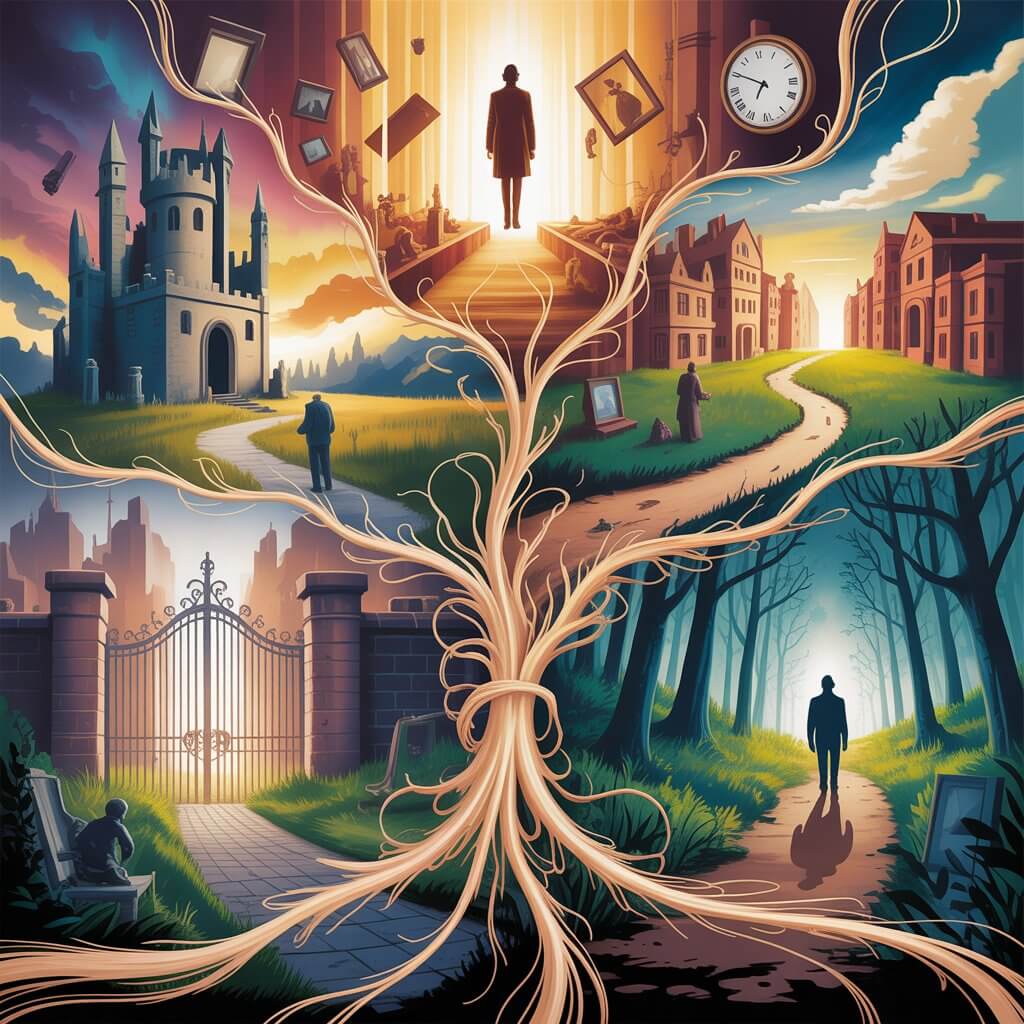
There's a specific feeling that separates great interactive fiction from the merely competent kind. It happens when you make a choice — usually one that felt genuinely hard — and then you watch the story change because of it. Not in some cosmetic, inconsequential way. In a way that matters. A character who isn't there anymore. A door that's now closed. A version of yourself in the story that you made, and can't unmake.
That feeling is what the best choice-based stories are built around. And once you know what to look for, you'll start noticing immediately when it's present — and when it isn't.
Not all choices are equal
Here's something experienced readers of interactive fiction learn quickly: many stories give you choices that don't actually change anything.
You're presented with two options. You pick one. A paragraph plays out. Then the story continues on a path that was the same either way. The choice was decoration — a way of making you feel involved without actually involving you. Writers sometimes call this "the illusion of choice," and done carelessly, it's one of the most common ways interactive fiction lets its readers down.
It's not always cynical. Building a branching story is genuinely hard, and sometimes a writer needs to guide you back to the main path after a detour. The craft is in how they do it — whether the detour felt worthwhile, whether your choice shaped something even if it didn't change the destination, whether the convergence is invisible or jarring.
The best authors in the genre have thought seriously about this. Emily Short, one of the most respected writers and critics in interactive fiction, has written extensively about what separates real agency from the appearance of it — and her thinking has shaped how a generation of IF authors approach the problem.
What makes a choice feel real
Three things tend to separate meaningful choices from cosmetic ones.
Consequence that lingers. A choice that matters leaves a trace in the story. The character you were cold to in chapter two is unavailable when you need them in chapter five. The secret you chose to keep resurfaces. The world of the story has memory, and it uses that memory against you — or for you — depending on what you did. When a story does this well, you feel the weight of your past decisions accumulating toward the ending, and the ending feels earned in a way that passive reading never quite manages.
No obviously correct answer. The hardest choices to write are the ones where both options are genuinely defensible. Do you tell the truth and lose the relationship, or lie and protect it? Do you save one person you know or three strangers? The choices that stick with readers long after they've finished a story are almost never "do you take the good option or the bad option." They're the ones where you genuinely weren't sure — where you had to sit with the question before you answered it.
Cost and texture. A choice that costs nothing means nothing. The best interactive fiction authors make sure that taking one path means closing another — that the pleasure of what you gain is mixed with something like regret for what you didn't choose. This is what readers sometimes describe as "replay itch": the need to go back and see the other version, not because you made a mistake, but because you genuinely wonder what you left behind.
The craft behind the curtain
What readers experience as a natural, flowing choice is usually the result of careful structural planning by the author. Good interactive fiction isn't written linearly and then branched — it's architected from the start around the moments where the reader's agency actually changes something.
Authors working at the highest level think about choice structure the way architects think about load-bearing walls. Some branches can be cosmetic — they add texture and responsiveness without fundamentally changing the story's shape. Others are structural — they split the narrative into genuinely different versions of itself, each requiring its own writing, its own logic, its own ending.
The balance between these two types determines how a story feels to read. Too many cosmetic branches and the reader starts to feel like their choices don't matter. Too many structural branches and the story becomes expensive to write and inconsistent to read. The skill is in knowing which kind of branch a given moment calls for, and executing it well.
What to look for as a reader
You don't need to understand the structural theory to feel the difference. But knowing a few things can deepen your appreciation of stories that do this well.
When you finish a story, ask yourself: do the choices I made feel like they built toward this ending, or did the ending feel inevitable regardless of what I did? When you replay — and if the story is good, you probably will — are you genuinely curious what the other path holds, or does it feel like homework?
The stories worth reading more than once are the ones that make you feel, on the second playthrough, that you're reading something genuinely different — not because the text has changed completely, but because you have. You're making different choices, and the story is meeting those different choices with different material.
That experience — a story that grows and shifts as you change the decisions you bring to it — is what the format does at its best, and what no other form of storytelling can replicate.
If you're new to choice-based stories and want to understand the format before you start reading, our guide covers the full picture: What is interactive fiction? A complete guide for curious readers
And if you've been wondering about the difference between interactive fiction and visual novels — two forms that overlap more than most people realise — that's worth a read too: Visual novels vs. interactive fiction: what's the difference, and why it matters